
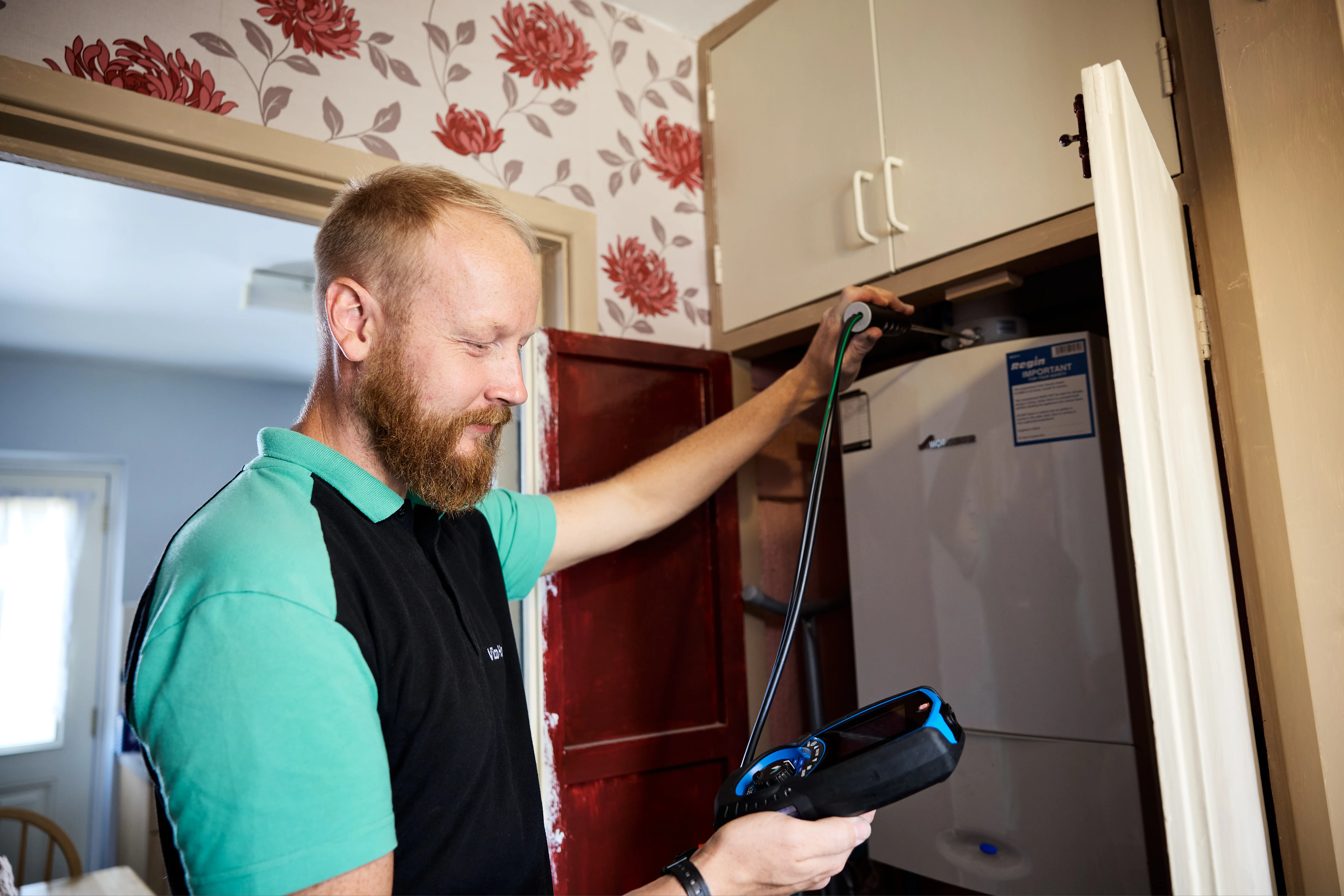
Poorly maintained gas appliances can be extremely dangerous, so we work hard to make sure your home stays safe. Our team of qualified gas engineers carries out checks and repairs throughout the year to keep your appliances running safely and efficiently.
By law, we must carry out a gas safety check in your home every year. These checks and services are completed by a Gas Safe Registered Engineer. We keep a record of every visit and give you a copy for your own peace of mind.
We also provide a breakdown and repair service, responding to thousands of jobs each year. This helps make sure you have reliable access to heating and hot water whenever you need it.
Gas bottles, cylinders and dangerous items
For everyone’s safety, please don’t store or use dangerous, flammable or explosive substances in your home, garage or any shared areas.
Bottled gas such as LPG, paraffin and portable barbecues are not allowed in buildings that are more than two storeys high. Mopeds, motorbikes or any equipment with a combustion engine cannot be kept inside your home or in indoor shared spaces.
It’s also illegal to store oxy acetylene gas bottles, which are often used for welding, anywhere in your home or in our buildings, garages or outbuildings.
Carbon monoxide
Carbon monoxide is a poisonous gas that you cannot see or smell. It can leak from faulty or poorly ventilated appliances and can cause serious illness or even death.
Symptoms include headaches, nausea, tiredness and confusion, and they often improve when you leave the home. If you ever suspect carbon monoxide, get into fresh air, seek medical help and call the National Gas Emergency Number on 0800 111 999.
You can keep your home safe by making sure appliances are serviced, chimneys are clear, vents are not blocked and barbecues are never used indoors. Every home has a carbon monoxide detector that can warn you of danger, but you must still allow us to carry out your yearly gas service to keep your home as safe as possible.
Burning solid fuel
If you use a solid‑fuel fire, stove or heater, it’s important to burn the right type of fuel for your appliance and for the area you live in.
Some places are smoke‑control zones, which means you must use authorised smokeless fuels unless you have an exempt appliance. Your local approved coal merchant can advise you on the best fuel to use.
Always use good‑quality fuel, keep your chimney clear and have it swept regularly. Make sure your appliance is serviced each year by a qualified engineer.
We provide carbon monoxide detectors for homes with fossil fuel systems, but you’re still responsible for keeping your chimney maintained. We’ll sweep it once a year free of charge.
We're working toward removing all solid-fuel systems from our homes, if you would be interested in a conversion, we'd be happy to look into alternative heating solutions for you.

Working together to keep your home safe
Everyone deserves to feel safe in their home, and we’re here to make sure you have the information and support you need.

Building Safety
How we manage building safety, your rights in high rise buildings, how to raise a safety concern and how to get involved in decision‑making.

Asbestos
What asbestos is, how we manage it, what to do if you think you’ve found it and how we keep our records up to date.

Electrical Safety
How we keep your electrical systems safe, what you can do to avoid electrical hazards and where to find our policies.

Fire Safety
How we maintain fire safe buildings, what to do in an emergency, help with evacuation needs, and tips for preventing fires at home.

Lift Safety
How we look after passenger lifts in our buildings, the checks we carry out and how we make sure they stay safe and reliable.

Water Safety
How we keep your water supply safe, information about Legionella, hot‑water safety, simple steps to keep your water safe and when to get in touch.