
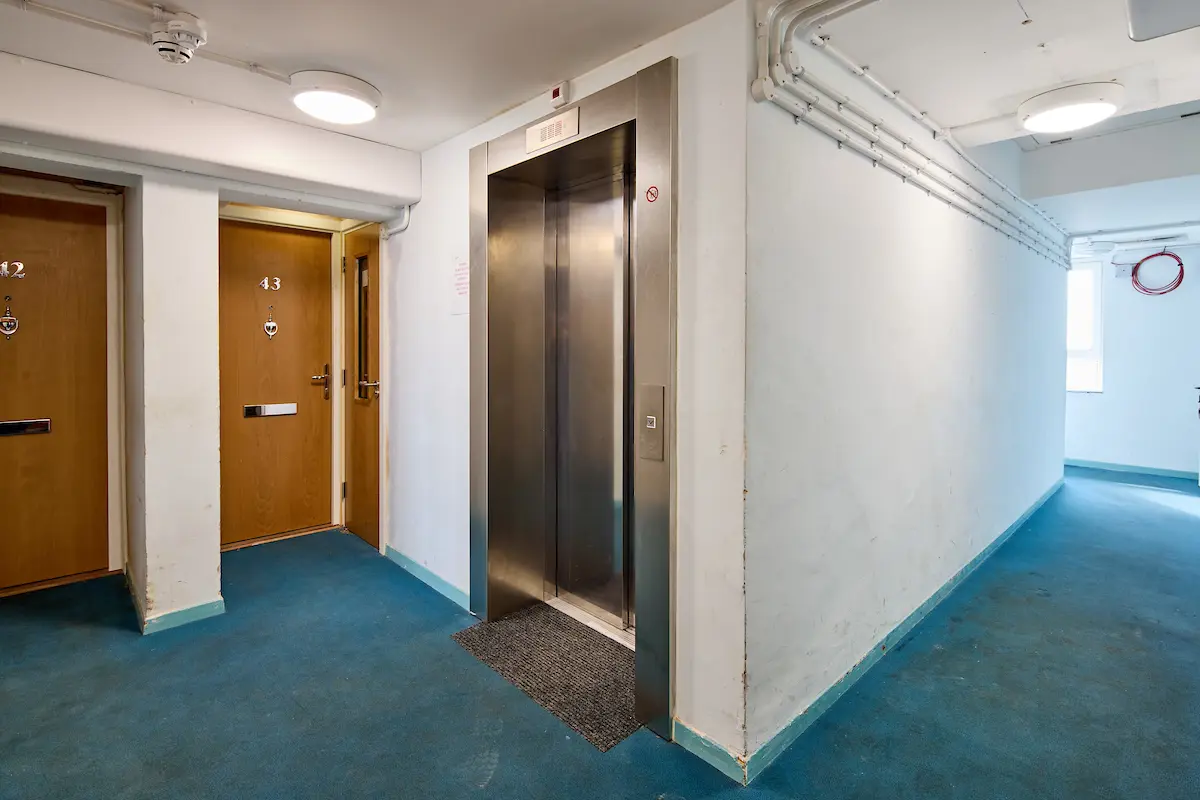
They’re designed to be extremely safe, and regular checks help keep them that way.
To make sure the lifts in our buildings stay reliable, safe and easy to use, we follow strict national safety standards. These standards require lifts to be inspected and tested at set times by trained specialists. As your landlord, it’s our responsibility to make sure these checks happen and that every lift is properly maintained.
Our job is to keep lifts in good working order, choose qualified engineers to look after them, fix any issues as soon as they’re found and keep all the right safety records up to date. To do this, we use two independent contractors who carry out routine servicing and thorough inspections throughout the year.
All of this helps make sure the lift in your building works safely whenever you need it.
If the lift in your building is not working as it should, please let us know.
Lifts should not be used if there’s a fire.
Safe use and emergency instructions
Passenger lifts are provided in some of our communal buildings and are there to help everyone move safely and easily between floors. By following a few simple steps, you can help keep yourself and others safe.
Let people exit the lift before you enter.
Step in and out carefully - don’t rush.
Hold the handrail if you need extra support.
Keep clear of the doors as they open and close.
Never try to stop the doors with your hands, feet, or mobility aids.
If the doors are closing, wait for the next lift.
Don’t lean on the doors.
Every lift has a maximum number of people it can carry.
If the lift looks full, wait for the next one.
Overloading can stop the lift from working properly.
Hold children’s hands and keep pets close to you.
Make sure they don’t run into the lift or stand near the doors.
Once inside, press the button for your floor.
Stand still and hold the handrail if needed.
Avoid leaning on the doors.
Stay calm, the lift is designed to stop safely.
Use the emergency button or phone inside the lift to call for help.
Do not try to force the doors open.
Help will come; the safest place is inside the lift.
Make sure wheels on pushchairs, walkers, or wheelchairs are not touching the lift doors.
Position yourself so you can move in and out safely without rushing.
Don’t leave rubbish, spills, or other items in the lift.
Report any damage or problems to us as soon as possible.
-

Adaptions
We work with local authorities to provide minor and major adaptations for our customers.
If you have a disability or a long-term medical condition or have difficulty doing everyday tasks such as climbing stairs or having a bath, we may be able to help you continue to live independently by adapting your home.
It’s really important that you follow the instructions for safe use and maintenance which we’ll give to you when you have equipment provided or installed.
These instructions are there to keep you safe.
Find out more

Working together to keep your home safe
Everyone deserves to feel safe in their home, and we’re here to make sure you have the information and support you need.

Building Safety
How we manage building safety, your rights in high rise buildings, how to raise a safety concern and how to get involved in decision‑making.

Asbestos
What asbestos is, how we manage it, what to do if you think you’ve found it and how we keep our records up to date.

Electrical Safety
How we keep your electrical systems safe, what you can do to avoid electrical hazards and where to find our policies.

Fire Safety
How we maintain fire safe buildings, what to do in an emergency, help with evacuation needs, and tips for preventing fires at home.

Gas and Heating Safety
How we keep your gas supply safe, what our engineers do, the dangers of carbon monoxide , and how to stay safe when using gas appliances.

Water Safety
How we keep your water supply safe, information about Legionella, hot‑water safety, simple steps to keep your water safe and when to get in touch.